UPSC Public Administration Optional Syllabus: Download PDF
The UPSC Public Administration Optional Syllabus 2025 is a crucial part of the IAS Mains Examination, covering Paper 1 (Administrative Theory) and Paper 2 (Indian Administration). Each paper carries 250 marks, making it a significant contributor to your overall rank.

- Public Administration is a popular optional subject due to its overlap with General Studies (GS) papers and its relevance to governance and policy-making.
- If you’re aspiring to become an administrator, understanding this syllabus will give you a deeper insight into how governments function.
Why Choose Public Administration as an Optional Subject?
- Overlaps with GS Papers: Topics like governance, public policy, and accountability are common in GS-II and GS-III.
- Scoring Potential: Well-defined concepts and structured answers can fetch good marks.
- Helps in Essay & Interview: Knowledge of administrative theories and Indian governance aids in writing essays and facing the interview panel.
However, since many candidates opt for Public Administration, competition is high. Hence, a strategic approach is necessary to stand out.
UPSC Public Administration Optional Syllabus 2025 – Paper 1 & Paper 2
The optional paper 1 in the Mains exam consists of questions carrying a total of 250 marks. Check the Public Administration Syllabus for UPSC Mains Optional Paper 1
PUBLIC ADMINISTRATION PAPER-I
1. Administration Theory:
Introduction: Meaning, scope and significance of Public Administration, Wilson’s vision of Public Administration, Evolution of the discipline and its present status. New Public Administration, Public Choice approach; Challenges of liberalisation, Privatisation, Globalisation; Good Governance: concept and application; New Public Management.
2. Administrative Thought:
Scientific Management and Scientific Management movement; Classical Theory; Weber’s bureaucratic model, its critique and post-Weberian Developments; Dynamic Administration (Mary Parker Follett); Human Relations School (Elton Mayo and others); Functions of the Executive (C.I. Barnard); Simon’s decision making theory; Participative Management (R. Likert, C. Argyris, D. McGregor.)
3. Administrative Behaviour:
Process and techniques of decision-making; Communication; Morale; Motivation Theories content, process and contemporary; Theories of Leadership: Traditional and Modern:
4. Organisations:
Theories, systems, contingency; Structure and forms: Ministries and Departments, Corporations, Companies; Boards and Commissions; Ad hoc, and advisory bodies; Headquarters and Field relationships; Regulatory Authorities; Public-Private Partnerships.
5. Accountability and Control:
Concepts of accountability and control; Legislative, Executive and judicial control over administration; Citizen and Administration; Role of media, interest groups, voluntary organisations; Civil society; Citizens’ Charters; Right to Information; Social audit.
6. Administrative Law:
Meaning, scope and significance; Dicey on Administrative Law; Delegated Legislation; Administrative Tribunals.
7. Comparative Public Administration:
Historical and sociological factors affecting administrative systems; Administration and politics in different countries; Current status of Comparative Public Administration; Ecology and administration; Riggsian models and their critique.
8. Development Dynamics:
Concept of development; Changing profile of development administration; ‘Anti-development thesis’; Bureaucracy and development; Strong state versus the market debate; Impact of liberalisation on administration in developing countries; Women and development, the self-help group movement.
9. Personnel Administration:
Importance of human resource development; Recruitment, training, career advancement, position Government strives to have a workforce which reflects gender balance and women candidates are encouraged to apply. classification, discipline, performance appraisal, promotion, pray and service conditions; employeremployee relations, grievance redressal mechanism; Code of conduct; Administrative ethics.
10. Public Policy:
Models of policy-making and their critique; Processes of conceptualisation, planning, implementation, monitoring, evaluation and review and their limitations; State theories and public policy formulation.
11. Techniques of Administrative Improvement:
Organisation and methods, Work study and work management; e-governance and information technology; Management aid tools like network analysis, MIS, PERT, CPM.
12. Financial Administration:
Monetary and fiscal policies: Public borrowings and public debt. Budget types and forms; Budgetary process; Financial accountability; Accounts and audit.
PAPER-II
1. Indian Administration
Evolution of Indian Administration: Kautilya Arthashastra; Mughal administration; Legacy of British rule in politics and administration, Indianization of Public services, revenue administration, district Administration, local self-government.
2. Philosophical and Constitutional framework of Government:
Salient features and value premises; Constitutionalism; Political culture; Bureaucracy and democracy; Bureaucracy and development.
3. Public Sector Undertakings:
Public sector in modern India; Forms of Public Sector Undertakings; Problems of autonomy, accountability and control; Impact of liberalisation and privatisation.
4. Union Government and Administration:
Executive, Parliament, Judiciary-structure, functions, work processes; Recent trends; Intergovernmental relations; Cabinet Secretariat; Prime Minister’s Office; Central Secretariat; Ministries and Departments; Boards; Commissions; Attached offices; Field organisations.
5. Plans and Priorities:
Machinery of planning; Role, composition and functions of the Planning Commission and the National Development Council; ‘Indicative’ planning; Process of plan formulation at Union and State levels; Constitutional Amendments (1992) and decentralised planning for economic development and social justice.
6. State Government and Administration:
Union-State administrative, legislative and financial relations; Role of the Finance Commission; Governor; Chief Minister; Council of Ministers; Chief Secretary; State Secretariat; Directorates.
7. District Administration since Independence:
Changing role of the Collector; Union-State-local relations; Imperatives of development management, and the Government strives to have a workforce which reflects gender balance and women candidates are encouraged to apply. Law and order administration; District administration and democratic decentralisation.
8. Civil Services :
Constitutional position; Structure, recruitment, training and capacity building; Good governance initiatives; Code of conduct and discipline; Staff associations; Political rights; Grievance redressal mechanism; Civil service neutrality; Civil service activism.
9. Financial Management:
Budget as a political instrument; Parliamentary control of public expenditure; Role of the Finance Ministry in monetary and fiscal area; Accounting techniques; Audit; Role of the Controller General of Accounts and Comptroller and Auditor General of India.
10. Administrative Reforms since Independence:
Major concerns; Important Committees and Commissions; Reforms in financial management and human resource development; Problems of implementation.
11. Rural Development: Institutions and agencies since Independence:
Rural development programmes: foci and strategies; Decentralization and Panchayati Raj; 73rd Constitutional amendment.
12. Urban Local Government: Municipal governance:
main features, structures, finance and problem areas; 74th Constitutional Amendment; Global-local debate; New localism; Development dynamics, politics and administration with special reference to city management.
13. Law and Order Administration:
British legacy; National Police Commission; Investigative agencies; Role of Central and State Agencies, including para-military forces in maintenance of law and order and countering insurgency and terrorism; Criminalisation of politics and administration; Police-public relations; Reforms in Police. 14. Significant issues in Indian Administration: Values in public service; Regulatory Commissions; National Human Rights Commission; Problems of administration in coalition regimes; Citizen administration interface; Corruption and administration; Disaster management.
Conclusion
The UPSC Public Administration Optional Syllabus 2025 is dynamic and highly relevant for future administrators. With overlap in GS papers and a logical approach, this subject can be a game-changer in your UPSC journey.Start your preparation early, download the syllabus PDF, and strategise wisely to maximise your score in the Mains exam!
Frequently Asked Questions (FAQs)
When is the Public Administration Optional batch starting?
The batch starts from 4th August 2025.
What will be the mode of classes?
We offer both Online and Offline (Hybrid) modes for flexibility.
Will the full syllabus (Paper I & II) be covered?
Yes, the entire UPSC syllabus for Public Administration Optional will be covered in a structured and exam-oriented manner.
Will there be answer writing practice?
Yes, regular weekly answer writing sessions with expert feedback are included in the program.
Who will be teaching this batch?
Classes will be taken by highly experienced faculty with a proven track record in mentoring successful candidates.
How can I enroll in the batch?
You can enroll by clicking here or contacting us via WhatsApp/Call at [Your Contact Number].
Which is the best optional subject for UPSC?
There is no single “best” optional. It depends on your interest, academic background, and availability of guidance. Public Administration is among the most popular due to its relevance to GS and essay papers.
Is Public Administration a scoring optional?
Yes, Public Administration can be scoring if prepared systematically. Good writing practice and conceptual clarity are key to scoring well in this subject.
Can I choose Public Administration if I don’t have a background in it?
Absolutely. Public Administration is a generalist subject and is manageable for students from any background with proper guidance and preparation.
How much time is needed to prepare Public Administration optional?
On average, 3–4 months of focused study is sufficient for a good grip on the syllabus, followed by consistent revision and answer writing practice.
Does Public Administration overlap with General Studies papers?
Yes, especially with GS Paper II (Governance & Polity), GS Paper IV (Ethics), and the Essay paper. This makes it a strategic optional choice for many aspirants.
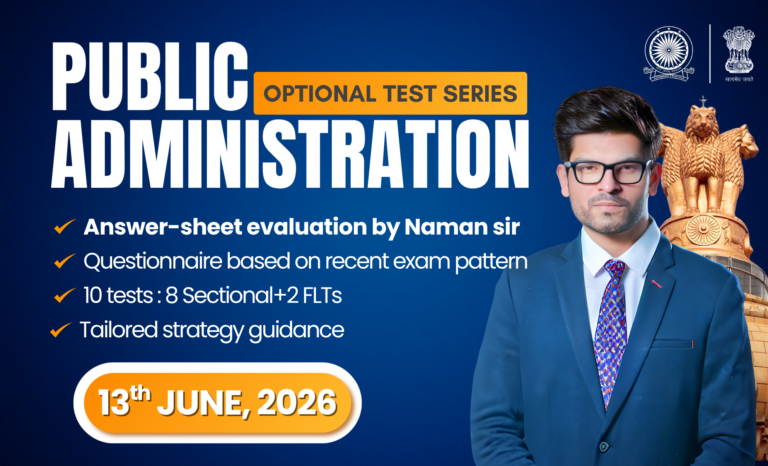
New Batch Announcement: Public Administration Optional – Starts 4th August 2025
We are excited to announce the launch of our Public Administration Optional Batch for UPSC 2025 aspirants!
- Start Date: 4th August 2025
- Mode: Online + Offline (Hybrid)
- Faculty: Expert guidance by experienced mentors with deep understanding of UPSC trends
- Features:

- Complete syllabus coverage (Paper I & II)
- Weekly answer writing & feedback
- PYQ-based approach
- Personal mentorship
- Dedicated doubt-clearing sessions
You can Also Watch Demo Class Here
📌 Limited Seats
👉 Enroll Now: https://www.namaniasacademy.com/course/pub-admn-optional-2025
Also Read: https://houseofupsc.com/importance-of-optional-subject-upsc-best-ias-academy-chandigarh/