India’s overcrowded jails pose a serious health risk to inmates
Why in the News?
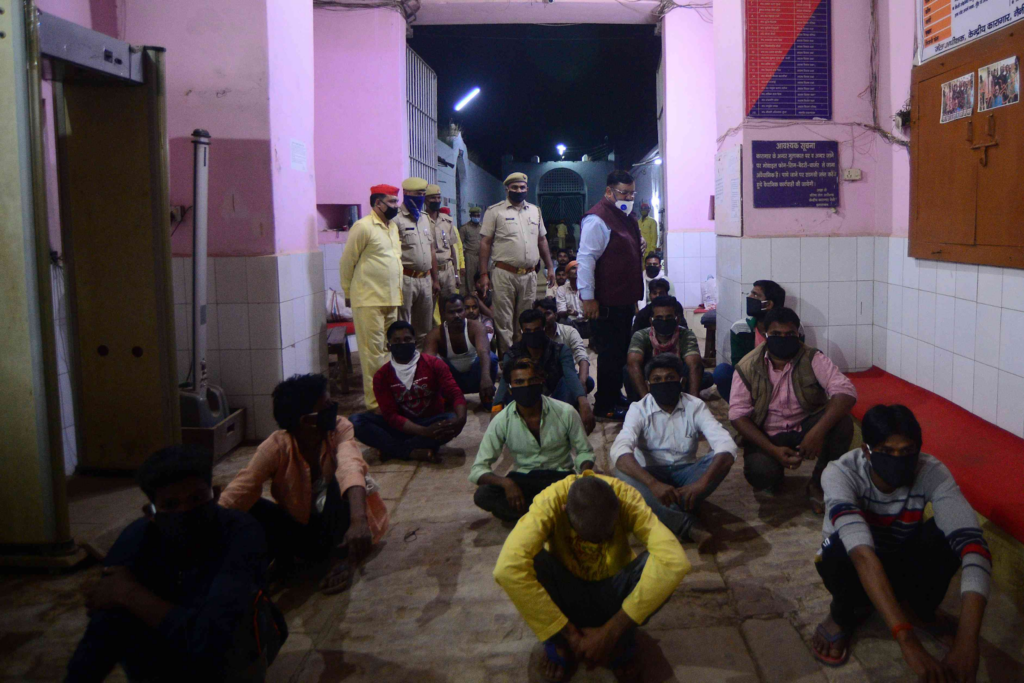
A recent and severe outbreak of the herpes simplex virus (HSV) at the Jalpaiguri Central Correctional Home in West Bengal has brought the dire conditions of India’s overcrowded prisons into sharp focus. Between August 2025 and March 2026, 92 inmates were infected, and seven died. The incident highlights how overcrowding and poor healthcare infrastructure transform even common ailments into fatal public health crises.
Background
- The Jalpaiguri Outbreak: The jail, operating at 171% occupancy, saw an HSV outbreak turn fatal, with experts noting that in immunocompromised or overcrowded populations with poor care, the virus can lead to encephalitis.
- Systemic Overcrowding: This is not an isolated incident. According to the 2023 Prison Statistics of India, district prisons in West Bengal have occupancy rates exceeding 160%, with some facilities like the Kandi Sub-Jail historically reaching over 400%.
- A Known Problem: Courts have repeatedly stressed that prisoners do not lose the right to health. Despite this, the conditions in Indian jails have been a long-standing concern, marked by poor infrastructure and a general disregard for treating ailments until they become critical.
Feature
Communicable Diseases:
- Tuberculosis (TB): A 2023 study in The Lancet Public Health found prisoners in India are five times more likely to develop TB than the general population due to unventilated environments.
- Skin Diseases: In 2023, 30% of inmates in 10 Kerala prisons had skin diseases caused by humidity and lack of personal space.
- HIV: The India Justice Report 2025 notes HIV prevalence is significantly higher among inmates due to shared equipment and inadequate screening.
- COVID-19: Major outbreaks occurred in Nagpur and Indore central jails during the pandemic.
Infrastructure and Staffing Crisis:
- High Occupancy: Overcrowding makes basic hygiene and isolation impossible.
- Vacant Posts: The India Justice Report 2025 flagged a 43% vacancy rate for medical officers. The number of inmates per doctor is 2.6 times higher than the Model Prison Manual recommends.
- Mental Health Neglect: There are only 25 psychologists for India’s 5.7 lakh inmates.
Challenge
The core challenge is the systemic failure to treat prisons as an extension of the public health system. Overcrowding clogs the system, while a massive shortage of medical staff prevents adequate screening and care. This is compounded by a large population of undertrials (who constitute the majority of inmates), whose prolonged detention due to a slow judicial process worsens the overcrowding. The situation creates a vicious cycle where poor health is both a cause and consequence of the prison environment.
Way Forward
- Integrate Prisons into National Health Mission: This would ensure a sufficient number of health workers are trained to manage and prevent outbreaks.
- Enforce Standards: Uniformly enforce the staffing and infrastructure standards outlined in the Model Prison Manual across all States.
Judicial Reforms to Reduce Overcrowding:
- Fast-track cases involving undertrials.
- Expand the use of bail and non-custodial alternatives for minor offences.
- Expedite the repatriation of foreign nationals.
- Temporary Release: As West Bengal demonstrated in 2020, temporarily releasing undertrials can provide immediate relief from critical overcrowding during health emergencies.
Conclusion
The HSV outbreak in Jalpaiguri is not an anomaly but a predictable consequence of a neglected system. India’s overcrowded jails, with their poor infrastructure and critical shortage of medical staff, are breeding grounds for disease, turning common infections into fatal threats. Addressing this public health crisis requires more than just medical intervention; it demands a holistic approach that integrates prison health with the national health mission and, crucially, judicial reforms to decongest jails by rethinking the detention of undertrials. The right to health does not end at the prison gates, and the state has a constitutional obligation to ensure it is protected within them.