Education and skills are twins and inseparable: PM
Why in the News?
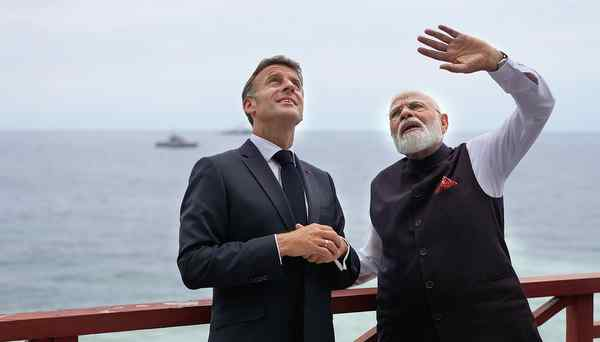
Prime Minister Narendra Modi, during the 9th edition of Pariksha Pe Charcha, emphasised that education and skills are “inseparable twins”, urging students to maintain a balance between academic learning and skill development. His remarks come amid a renewed policy focus on aligning education, skilling, and employment to achieve the goal of a “Viksit Bharat 2047.”

Background
- Pariksha pe Charcha is an annual outreach initiative where the Prime Minister interacts with students on exam stress, learning habits, and life skills.
- India has been undergoing education reforms under the National Education Policy 2020, which stresses:
- multidisciplinary learning,
- vocational exposure,
- skill integration,
- flexibility in learning pathways.
- The government has recently announced a committee on education, employment, and entrepreneurship, signalling stronger policy convergence.
Features
Education + Skills = Twin Pillars
- Pm of India Modi compared education and skills to eating and sleeping – both are essential. Academic success alone is insufficient without practical capability.
Life Skills vs Professional Skills
- Life skills: discipline, confidence, adaptability (finite but foundational)
- Professional skills require lifelong upgrading due to technological change.
Flexible Learning Patterns
- Students should adopt study methods suited to their personality while remaining open to change.
Technology as a Supplement
- AI and robotics should strengthen human capability, not replace effort.
Interest-driven Careers
- Gaming, digital creation, and emerging sectors were acknowledged as legitimate career paths, with caution against betting/gambling ecosystems.
Challenges
Education–Employment Disconnect
- Many graduates remain unemployable due to a lack of practical skills.
Exam-centric Culture
- The system prioritises marks over creativity and applied learning.
Skill Inequality
- Urban students have better exposure to modern skill ecosystems than rural students.
Rapid Technological Change
- AI and automation continuously reshape required skills.
Parental & Social Pressure
- Students often struggle to pursue non-traditional careers.
Way Forward
Integrate Skill-based Curriculum
- Vocational and technical training should begin early in schooling.
Strengthen Industry Linkages
- Internships, apprenticeships, and startup ecosystems must be embedded into education.
Promote Lifelong Learning
- Continuous reskilling platforms for adults are essential.
Teacher Training
- Educators must be equipped to guide students beyond rote learning.
Career Counselling Ecosystem
- Formal counselling systems should help students align interests with opportunities.
Conclusion
The Prime Minister’s message reinforces a central truth of modern economies: degrees without skills are incomplete, and skills without education lack foundation. India’s growth trajectory depends on harmonising both. For a young nation aspiring to become a developed economy by 2047, the fusion of education, adaptability, and skill development is not optional – it is the blueprint for national transformation.