BRICS will create a balanced ‘Multipolar’ world order: PM
Why in the News?
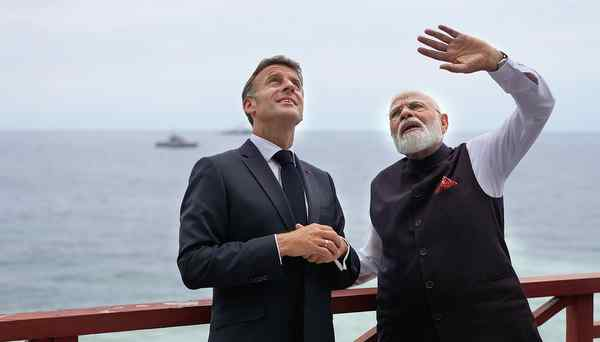
On July 2, 2025, Prime Minister Narendra Modi began a landmark five-nation diplomatic tour encompassing Ghana, Trinidad and Tobago, Argentina, Brazil, and Namibia. At the heart of this outreach is India’s commitment to strengthening South-South cooperation and pushing for a more equitable multipolar global order.
- The highlight of the visit is PM Modi’s participation in the BRICS Summit held in Rio de Janeiro, Brazil, where he reaffirmed India’s role in crafting a fairer international system.
- Modi emphasised that the BRICS grouping, composed of Brazil, Russia, India, China, and South Africa, must act as a catalyst for reforming global governance institutions, particularly in representing the interests of the Global South.
- In addition to attending the summit, PM Modi is also receiving state honours in Ghana and Trinidad and Tobago, a sign of deepening bilateral ties.
- The visit also features critical talks on vaccine production, trade, diaspora linkages, and parliamentary diplomacy.

Background
The Global South and BRICS
The term “Global South” refers to the collective of developing nations in Africa, Asia, and Latin America that often share common historical experiences of colonialism, economic inequality, and underrepresentation in global institutions like the UN Security Council, the IMF, and the World Bank.
The BRICS grouping, formalised in 2009, was envisioned as a platform for emerging economies to challenge the unipolar world order led by the West and to build new institutions such as:
- The New Development Bank (NDB)
- The Contingent Reserve Arrangement (CRA)
- Efforts toward a BRICS currency/payment mechanism
India has historically aligned with the Global South’s aspirations, evident in its leadership during:
- Bandung Conference (1955)
- Non-Aligned Movement (NAM)
- Recent initiatives like the Voice of the Global South Summit (2023), hosted virtually by India.
Features of the Visit: Five Countries, Multiple Agendas
Ghana: Health, Energy, and Diplomacy
- PM Modi landed in Accra and held talks with President John Mahama.
- Focus areas: vaccine production (Ghana seeks to be Africa’s vaccine hub), health diplomacy, energy cooperation, and investment.
- Modi addressed Ghana’s Parliament, reinforcing India’s democratic and developmental partnership.
- Awarded Companion of the Order of the Star of Ghana, the highest civilian honour.
Trinidad and Tobago: Diaspora Diplomacy and Ancestral Ties
- Strong diaspora linkages, with over 40% of Trinidad’s population having Indian ancestry.
- Modi was conferred with the Order of the Republic of Trinidad and Tobago.
- Focus on rejuvenating bonds of ancestry and enhancing cooperation in pharmaceuticals, ICT, and climate action.
Argentina: Expanding South American Engagement
- India’s third-largest trading partner in Latin America.
- Cooperation areas: agro-technology, lithium supply chains, and renewable energy.
- Part of India’s broader strategy to reduce dependency on China for critical minerals.
Brazil: BRICS Summit and State Visit
- PM Modi attended the BRICS summit in Rio de Janeiro.
- Discussions centred on:
- Expansion of BRICS membership (as seen in 2023 with Egypt, UAE, Iran, etc.)
- De-dollarisation and alternative payment systems
- UN Security Council reforms
- South-South technology transfer
- State visit to Brasilia followed, with discussions with President Luiz Inácio Lula da Silva on climate finance, Amazon cooperation, and NDB funding.
Namibia: Parliamentary Diplomacy and Africa Outreach
- PM Modi met President Netumbo Nandi Ndaitwah.
- Addressed the Joint Session of the Namibian Parliament.
- Focus on:
- Climate resilience
- Renewable energy (Namibia has solar energy potential)
- Defence training and capacity-building
India’s Strategic Goals: Reading Between the Lines
Amplifying Voice of the Global South
India positions itself as a “bridge” between the developed and developing world.
- Through BRICS and bilateral visits, India seeks to project issues such as:
- Global debt distress
- Equitable vaccine access
- Climate finance for adaptation (not just mitigation)
BRICS as a Counterbalance to the West
- Pushing for a multipolar world that challenges:
- Dollar hegemony
- Dominance of the G7 in multilateral forums
- Promoting local currency trade and new financial architecture (like the NDB)
African Engagement
- Africa is a priority for India’s development diplomacy.
- Key focus:
- Infrastructure development
- Line of Credit (LOC)-based projects
- Education and skilling
- Joint vaccine manufacturing hubs (as seen in Ghana talks)
Diaspora Diplomacy
- Visits to countries like Trinidad and Tobago and Namibia strengthen people-to-people ties, leveraging the Indian diaspora as soft power agents.
Challenges in Building a Multipolar World Order
Internal Differences within BRICS
- Tensions between India and China (e.g., LAC conflict) weaken BRICS cohesion.
- Russia’s war in Ukraine and Western sanctions complicate BRICS’ global perception.
- Varying visions: While India and Brazil stress democratic multilateralism, others push state-led models.
Over-dependence on Tokenism
- Awards and honours symbolise goodwill, but many MoUs lack follow-through.
- Vaccine hub initiatives in Africa need technology transfer, IP waivers, and regulatory convergence.
Global Institutions Remain Skewed
- Despite calls for reform, UNSC expansion, IMF quota revision, or WTO rule changes are blocked by entrenched Western interests.
- G20, though expanded with African Union inclusion, remains elite-driven.
De-dollarisation Challenges
- While BRICS promotes alternative trade systems, realising them is difficult:
- Lack of trust in local currencies
- SWIFT and US sanctions dominance
- NDB lending remains modest ($33 billion since 2015)
South-South Fragmentation
- The Global South is not monolithic:
- Differing priorities (e.g., climate vs debt vs trade)
- Power competition (India vs China in Africa, Latin America)
Way Forward
Institutionalise the Global South Voice
- India must continue initiatives like the Voice of the Global South Summit.
- Propose a permanent “G-Global South Forum” for collective negotiation at multilateral platforms.
Reform BRICS from Within
- Push for transparent rules for:
- BRICS+ expansion
- Rotating leadership
- Interoperability in trade finance systems
Expand Development Diplomacy
- Scale up India’s Lines of Credit (LOCs) with accountability.
- Promote triangular cooperation (e.g., India-Brazil-Africa on food security)
Leverage Digital and Health Diplomacy
- Offer Digital Public Infrastructure (DPI) tools like Aadhaar/UPI to partner countries.
- Expand Vaccine Maitri 2.0: Co-develop vaccine plants in Africa and Latin America.
Build Coalitions on Global Reforms
- With like-minded countries like Brazil, South Africa, Indonesia, Egypt, and India can:
- Form pressure groups within the WTO, the IMF, and the UNSC
- Advocate for climate justice, IP reforms, and equitable trade rules
Conclusion
Prime Minister Modi’s five-nation tour, culminating in the BRICS Summit, is more than just a diplomatic tour de force. It is a bold attempt to reshape global narratives, reaffirm India’s identity as a leader of the Global South, and strengthen multilateralism at a time of global fragmentation.
Frequently Asked Questions (FAQ)
What is the significance of PM Modi’s recent five-nation tour?
The July 2025 diplomatic outreach by Prime Minister Modi to Ghana, Trinidad and Tobago, Argentina, Brazil, and Namibia signals India’s renewed commitment to South-South cooperation and a multipolar world. It highlights India’s strategic aim to represent the Global South in reforming global governance.
Why is the BRICS Summit in Brazil important?
Held in Rio de Janeiro, the BRICS Summit served as a platform for PM Modi to advocate for:
- Restructuring global institutions
- De-dollarisation of trade
- UN Security Council reform
- Expansion of BRICS membership
- South-South technology transfer
What are India’s key objectives from this visit?
India aims to:
- Amplify the voice of the Global South
- Deepen ties with diaspora nations
- Reduce dependence on the West (especially in critical minerals)
- Promote a just and inclusive global order through multipolarity
How does this tour align with India’s long-standing diplomatic approach?
This visit builds on India’s legacy of Global South solidarity as reflected in:
- The Bandung Conference (1955)
- Non-Aligned Movement
- Voice of the Global South Summit (2023)
MAINS PRACTICE QUESTION
Question: Discuss in the context of India’s recent diplomatic outreach and participation in the BRICS Summit 2025.