Modi-Xi Meet Improves India-China Ties, but Experts Urge Caution
Why in the News ?
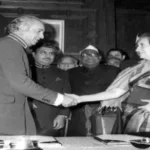
- Prime Minister Narendra Modi and Chinese President Xi Jinping met on the sidelines of the SCO Summit in Tianjin (September 2025).
- The meeting was seen as a step in “repairing” India-China relations, though experts warned against overstating its significance.
- The discussion took place at the launch of China: Indian Perspectives on China’s Politics, Economy and Foreign Relations, a special publication by The Hindu Group.

Background
- India-China relations have been strained since the 2020 Galwan clashes and continuing border standoffs in eastern Ladakh.
- Diplomatic dialogue resumed in 2024 with incremental disengagement at certain friction points.
- Previous Modi-Xi meetings (e.g., in Kazan, 2024) helped reopen channels, but core border issues remain unresolved.
- The Tianjin summit was part of efforts within the SCO framework to manage tensions while focusing on multilateral cooperation.
Feature
- Key Takeaways from the Book Launch & Panel
- Shivshankar Menon: The book helps India “learn to look at China” in a comprehensive way.
- Shyam Saran: It is “the most complete survey” of China’s contemporary politics and economy.
- Ashok Kantha: Ties began repairing in 2024; the Tianjin summit stabilised relations, but challenges persist.
- Manoj Joshi: The meeting is part of a process; its value should not be overstated.
- Vijay Gokhale: Warned about China’s internal centralisation policies; called for greater direct engagement.
- Tibet was highlighted as an enduring strategic and cultural factor in bilateral ties.
- Themes of Discussion Border disengagement remains unfinished
- China’s domestic authoritarianism may affect its economic trajectory and foreign behaviour.
- Need for Indian scholars, officials, and public to engage deeply with Chinese politics, society, and economy.
Challenge
- Border Disputes: Persistent tensions in eastern Ladakh and a lack of clarity over the Line of Actual Control (LAC).
- Trust Deficit: The Galwan incident and China’s opaque strategic moves eroded confidence.
- Geopolitical Competition: Rivalry in the Indo-Pacific, BRICS, SCO, and influence in South Asia.
- Information Gap: Limited Indian exposure to ground realities in China; difficulty understanding Chinese decision-making.
- Domestic Pressures: Rising nationalism in both countries complicates concessions.
Way Forward
- Sustained Dialogue: Continue high-level and military-to-military talks to resolve LAC friction points.
- Balanced Engagement: Advance trade, climate, and multilateral cooperation while safeguarding security interests.
- Knowledge Building: Promote Chinese language and area studies in India; send more scholars and journalists to China.
- Confidence-Building Measures (CBMs): Strengthen border management protocols, hotline mechanisms, and transparency in troop deployments.
- Strategic Autonomy: Engage China without undermining ties with other partners (U.S., Japan, ASEAN, etc.).
- People-to-People Contact: Encourage academic, cultural, and business exchanges.
Conclusion
The Modi–Xi meeting in Tianjin marks a cautious step towards stabilising India-China relations after years of tension. However, as experts underline, border disputes, mutual distrust, and strategic competition remain unresolved. Real progress depends on sustained engagement, realistic expectations, and a deeper understanding of China’s internal dynamics and long-term ambitions.