Survey predicts upbeat India, troubled world
Why in the News?
The Economic Survey 2025–26, tabled in Parliament by Union Finance Minister Nirmala Sitharaman and authored under Chief Economic Adviser V. Anantha Nageswaran,
projects:
- India’s medium-term growth potential is rising to ~7%
- FY27 growth estimated at 6.8%–7.2%
- FY26 growth momentum stronger than earlier projections
- A grim and fragile global economic outlook
- A 10–20% probability of a global crisis in 2026, worse than the 2008 financial crisis
The Survey highlights India’s relative resilience but warns of external risks from capital flows, geopolitics, and AI-linked financial bubbles.

Background
The Economic Survey is an annual flagship document released by the Government of India before the Union Budget. It:
- Reviews the state of the economy
- Analyses macroeconomic trends
- Provides growth forecasts
- Suggests reform priorities
In its 2022–23 edition, the Survey had estimated India’s medium-term growth at 6.5%, stating that it could rise to 7–8% only with sustained structural reforms. The 2025–26 Survey now upgrades this estimate to 7%, citing reform momentum and macroeconomic strengthening.
Globally, the Survey notes rising uncertainty due to:
- Financial fragility
- Geopolitical tensions
- Trade disruptions
- High-risk investments in emerging technologies like AI
Features
Stronger Domestic Growth Outlook
- Medium-term growth upgraded from 6.5% → 7%
- FY25–26 government growth estimate: 7.4%
- Q3 FY26 nowcast: ~7%
- FY26–27 growth projection: 6.8%–7.2%
Drivers identified:
- Capital formation growth
- Higher labour participation
- Improved productivity and efficiency
- Better factor deployment
Reform Momentum Supporting Growth
The Survey credits recent reforms for raising growth potential:
- Production Linked Incentive (PLI) schemes
- Manufacturing push
- FDI liberalisation
- Logistics and supply chain reforms
- Public investment in physical & digital infrastructure
- Tax simplification
- MSME credit support measures
- Improved tax administration
- Corporate and banking sector balance sheet repair
- Rising employment formalisation
Three Global Risk Scenarios for 2026
The Survey uses probabilistic scenario building:
Worst-Case Scenario (10–20% probability)
- Crisis worse than the 2008 Global Financial Crisis
Combined shocks:
- Financial stress
- Tech sector corrections (especially AI-linked leveraged investments)
- Geopolitical escalation
Possible outcomes:
- Global liquidity contraction
- Capital market crash
- Risk aversion spike
- Trade and investment disruptions
Best-Case Scenario (40–45% probability)
- 2025-like conditions continue
- But system becomes:
- More fragile
- Less secure
- Vulnerable to shocks
Disorderly Multipolar Breakdown (40–45% probability)
- Intensified strategic rivalry
- Prolonged Russia–Ukraine conflict
- Weakening global institutions
- Fragmented security and trade frameworks
AI Investment Bubble Risk
The Survey flags highly leveraged AI investments as an emerging risk:
- Over-optimistic execution timelines
- Narrow customer concentration
- Long-duration capital commitments
- Potential tech-sector correction could:
- Tighten financial conditions
- Trigger broader capital market stress
- Reduce global investment flows
Risks to India Identified
India remains relatively better placed but not insulated.
Common risk across all scenarios:
- Disruption of capital flows
- Pressure on the rupee
- Imported inflation risk
- External financing stress
Survey stresses the need to:
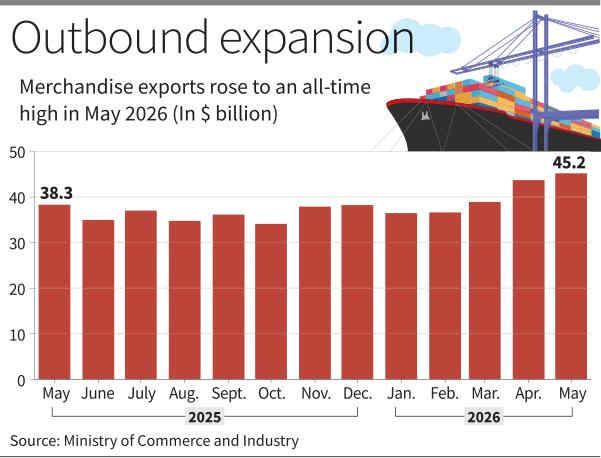
- Boost export earnings
- Attract foreign investment
- Maintain forex buffers
- Support currency stability
Challenges
External Sector Vulnerability
- Dependence on capital inflows
- Exposure to global liquidity shocks
- Currency volatility risks
Rising Import Bill with Growth
- Higher incomes → higher imports
- Energy, technology, and capital goods dependence
Global Financial Fragility
- Leveraged tech investments
- Asset bubbles
- Cross-market contagion risk
Geopolitical Fragmentation
- Trade disruptions
- Sanctions regimes
- Supply chain realignments
Reform Sustainability
- Growth upgrade depends on:
- Continued reforms
- State-level implementation
- Manufacturing competitiveness
Way Forward
Strengthen Domestic Growth Engines
- Sustain infrastructure investment
- Expand manufacturing base
- Deepen PLI-linked ecosystem
- Improve logistics competitiveness
External Sector Resilience
- Diversify export basket
- Promote high-value manufacturing exports
- Strengthen services exports
- Increase forex reserves
Financial Stability Measures
- Monitor tech-sector leverage
- Strengthen regulatory oversight
- Build macroprudential buffers
Labour & Productivity Reforms
- Raise labour force participation
- Skill development aligned with industry
- Formalisation incentives
MSME & Credit Ecosystem Support
- Lower credit constraints
- Expand digital credit rails
- Improve risk assessment tools
Strategic Global Positioning
- Trade diversification
- Bilateral currency arrangements
- Supply chain partnerships
Conclusion
The Economic Survey 2025–26 presents a two-speed world outlook: a confident and reform-strengthened Indian economy alongside a fragile and risk-prone global system. India’s upgraded medium-term growth potential of 7% reflects reform momentum, infrastructure push, and financial sector repair.