India Will Become a Hub of Natural Farming: PM Modi
Why in the News?
Prime Minister Narendra Modi inaugurated the South India Natural Farming Summit 2025 in Coimbatore and announced that India is poised to become a global hub of natural farming.
He stressed the need to combine traditional knowledge, scientific validation, and government support to restore soil health and reduce dependence on chemical inputs.

Background
- India’s Green Revolution increased production but also led to:
- soil degradation
- excessive chemical fertiliser use
- water stress
- declining biodiversity
- Natural farming, including Zero Budget Natural Farming (ZBNF) and organic methods, is gaining momentum.
- The National Mission on Natural Farming (2023) promotes chemical-free agriculture with pilot clusters nationwide.
- Tamil Nadu has emerged as an active participant, with 35,000 hectares now under natural and organic farming.
- PM Modi’s push aligns with global trends in sustainable agriculture and climate-resilient food systems.
Features
Natural farming: “Need of the 21st century”
- PM Modi said restoring soil health is essential as decades of chemical-intensive agriculture have caused:
- nutrient depletion
- soil toxicity
- groundwater contamination
Science-backed movement
- The Prime Minister emphasised that natural farming must not be seen merely as traditional wisdom but should be supported by scientific research, extension services, and modern technology.
Encouraging youth in agriculture
He noted a rise in educated youth taking up agriculture, using:
- precision tools
- sustainable practices
- market-linked approaches
Government push
Several government actions were highlighted:
- National Mission on Natural Farming is impacting lakhs of farmers
- Expansion of FPOs to scale natural farming
- Reduction in GST on bio-fertilisers
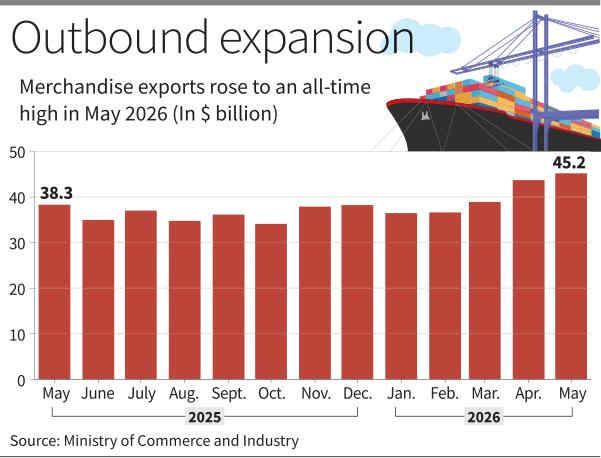
- Increase in agricultural exports (doubled in 11 years)
- Over ₹10 lakh crore under the Kisan Credit Card scheme for farming, livestock, and fisheries
- PM-Kisan 21st instalment: ₹18,000 crore transferred to farmers; ₹4 lakh crore disbursed so far
Gradual adoption model
PM Modi advised farmers to:
- begin with one acre under natural farming per season
- scale up gradually
Multi-cropping over monoculture
He advocated diverse cropping systems for:
- increased resilience
- better soil fertility
- optimised land productivity
Integrating natural farming into education
Research institutions and agricultural universities were urged to:
- Include natural farming in curricula
- treat farmers’ fields as “living laboratories”
Challenges
Productivity concerns
- Some stakeholders fear that yields may drop during the transition from chemical-intensive to natural farming.
Market access and premium pricing
- Natural produce often demands better value chains, certification, and consumer awareness.
Limited scientific consensus
- While many practices show promise, large-scale evidence and standardisation are still developing.
Initial transition risks for small farmers
Farmers dependent on high-input high-yield crops face uncertainty during:
- pest outbreaks
- soil recovery periods
- market fluctuations
Institutional coordination
Natural farming promotion requires alignment between:
- Centre
- States
- FPOs
- research institutions
- extension agencies
Way Forward
Strengthening scientific validation
Research bodies like ICAR should conduct:
- long-term field trials
- soil and water impact studies
- Crop-wise protocols for natural farming
Scalable models via FPOs
FPOs should lead in:
- training
- aggregation
- marketing
- branding of natural produce
Incentives and support
Governments may consider:
- transition subsidies
- Input support for bio-fertilisers
- carbon farming rewards
- Crop insurance tailored to natural farming
Strengthening certification and traceability
- Digital systems can help certify and market natural produce globally.
- Multi-crop and climate-resilient systems
Encourage agroecological practices such as:
- intercropping
- agroforestry
- integrated farming
Conclusion
Prime Minister Modi’s vision frames natural farming as a science-based, tradition-supported, and government-backed model for the agriculture of the future.
India’s efforts in research, policy support, FPO development, and farmer incentives position it to emerge as a global leader in sustainable agriculture.